


One of the first Father’s Day gifts I purchased when I started my graduate program in Audiology was a pair of noise-canceling headphones for my dad to use while he mows the lawn. We often joke that the lawn is his fifth child, given the extent to which he cares for it, so it seemed only appropriate that I do everything in my ear-educated power to protect him! This article will review why it is important to use hearing protection while mowing and offer some suggestions of styles to consider for mowing headphones.
Importance of safety during mowing
The hearing portion of the inner ear, or cochlea, is a fluid-filled organ. Sound travels through the ear canal and into the middle ear, where the ossicles push into a membrane leading to the inner ear and create a “traveling wave,” activating tiny hair cells tuned to specific frequencies. Noise exposure can cause damage to these hair cells, which unfortunately do not regenerate.
The Occupational Safety and Health Administration (OSHA) outlines guidelines for safe workplace environments, and noise exposure is one of their regulatory areas. The noise is measured by intensity (loudness) and frequency (pitch), and the amount of allowable exposure time is dependent on these factors. As you might imagine, extremely loud sounds have shorter exposure times and work environments with louder noise typically mandate the use of hearing protection. In other settings, the noise levels are not quite as intense, and therefore, hearing protection might be considered optional. OSHA also mandates regular hearing testing in certain settings to monitor any potential shifts in hearing thresholds.
Depending on the type of lawn mower you are using, the noise level can range from 75 dB to 95 dB. Riding mowers tend to be louder than push mowers, but either would warrant the use of hearing protection because they are at or above the level at which OSHA would recommend it, particularly for the duration of time it might take to mow your lawn.
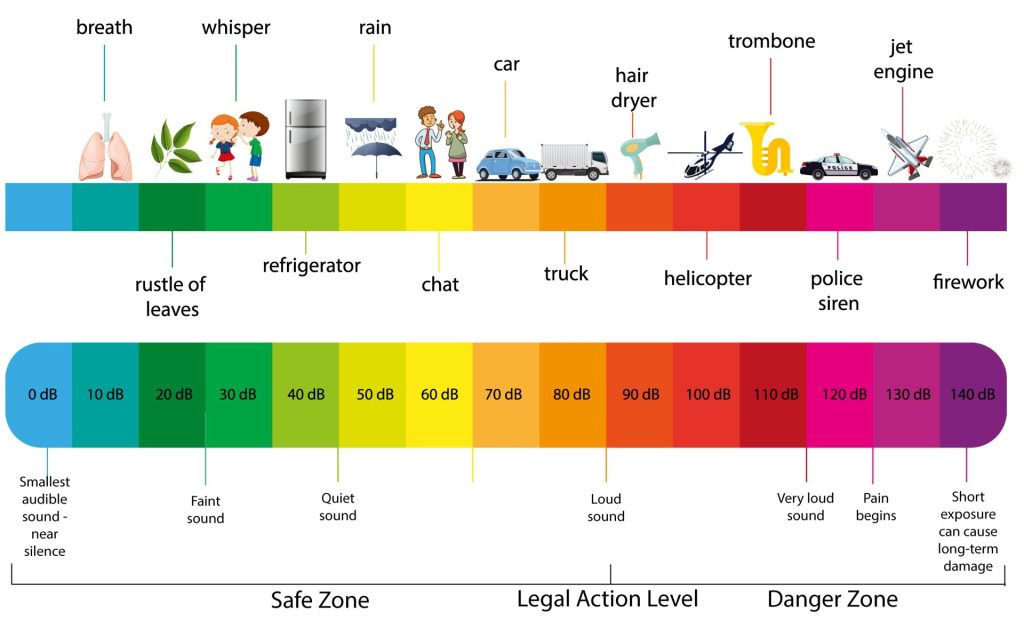
While mowing the lawn may not be your occupation, it is an activity that justifies awareness of the dangers of noise-induced hearing loss. It typically involves loud, steady-state noise that can be harmful to your hearing, even for short periods of time. It is important to note that there are many factors that contribute to hearing loss in addition to noise, including age and genetics. There is no guarantee that regular use of hearing protection, like headphones for mowing, will prevent any degree of future hearing loss, but it is always beneficial to be on the safe side.
Introduction to noise-canceling headphones
The concept of “noise-canceling” has been around for nearly 100 years. In its simplest form, a noise-canceling device seeks to determine low-frequency background noise (think airplane noise) and emit a signal that is exactly 180 degrees out of phase. The image below helps to illustrate what a sound wave looks like and how a competing wave can “cancel” it out.
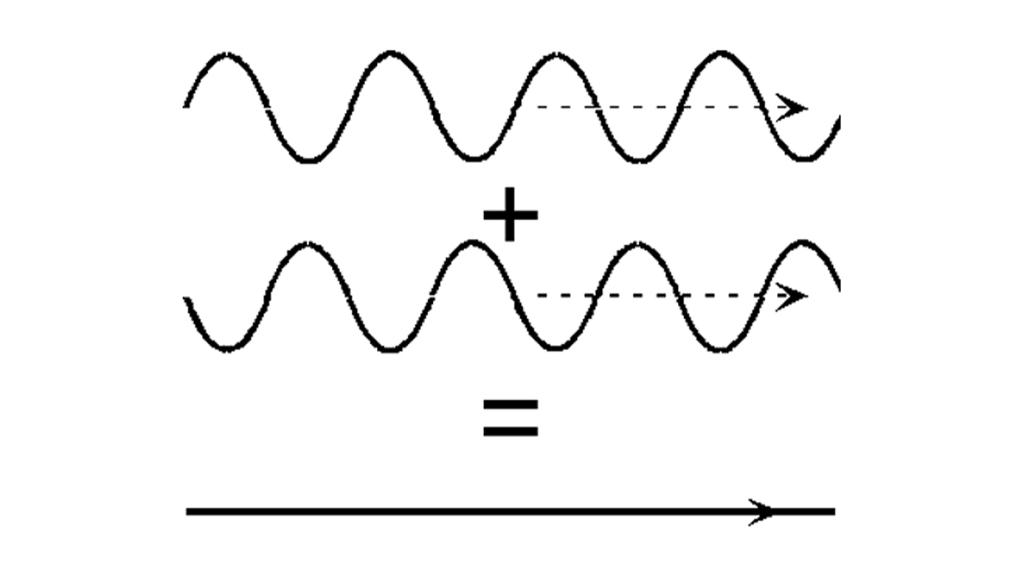
As you might guess, this technology works quite well when the noise you are trying to eliminate is consistent in both frequency (pitch) and intensity (loudness), which both dictate the shape of the wave and, thus, the shape of the inverse wave. Attempting to cancel much more complex sounds, such as speech, is considerably more difficult. Fortunately, the steady-state noise produced by a lawn mower is the ideal type of sound for noise-canceling headphones to work effectively.
Factors to consider when choosing mowing headphones
There is a wide variety of noise-canceling headphones on the market, some intended for specific purposes such as hunting, construction work, or in this case, headphones for mowing the lawn, and others are more generic and marketed to anyone seeking hearing protection or finding quiet in noisy situations (i.e., an airplane).
- Comfort and fit
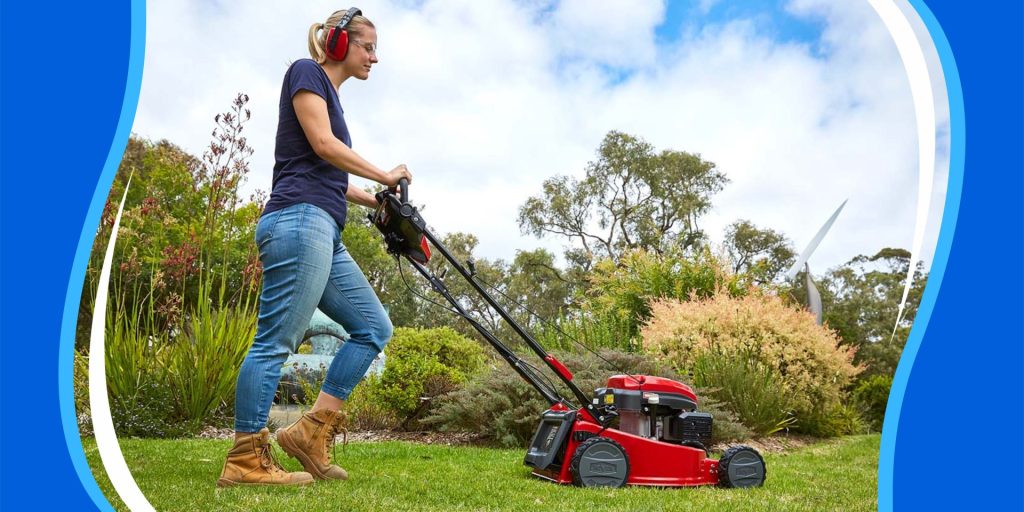
The first style is in-the-ear headphones, which offer noise cancellation in addition to streaming, either via Bluetooth or wired audio. Another style option for hearing protection is over-the-ear headphones or earmuffs. These are more commonly seen in the noise-canceling headphone space, as they have the advantage of physically containing the entire pinna (outer ear) to prevent incoming noise in addition to active noise cancellation. One disadvantage of both styles is that while they block out harmful noise, they can also attenuate sounds you might want to hear, including the sound of your own voice. Some users may feel that the noise cancellation is bothersome or disorienting. - Durability and water resistance
As you can imagine, you will want something durable and water-resistant if you are planning to use the headphones outside in a range of weather conditions. Often, lawn debris is kicked up while mowing, so mowing headphones that can be wiped clean or disposed of would be a good choice for this scenario. You can look at the ingress protection (IP) rating of the devices. The first number represents resistance against dust and debris; the highest rating is 6. The second number represents resistance against water; the highest number is 8, indicating the device is fully waterproof. A rating of 57, 67, or 68 would be great options for outdoor use. - Battery life
Active noise-canceling technology uses battery power in order to operate. You will want to find mowing headphones that can sustain this for the duration of time it takes to mow the lawn. Headphones that allow for simultaneous Bluetooth streaming may also demand additional power. If you are simply seeking noise reduction, you can find devices that offer hearing protection without any need for power. - Noise cancellation
There is a difference between active noise cancellation and noise reduction. This is a matter of personal preference and perhaps other intended uses for your headphones beyond mowing. Additionally, noise-canceling headphones are only going to be available in certain styles, so this may not fit with your preferences. Most hearing protection devices have a noise reduction rating (NRR), which indicates the degree to which noise will be blocked; the higher the NRR, the more sound will be attenuated. The NRR is presented in decibels, so if you have hearing protection with an NRR of 29, that would be sufficient for noise up to 114 dB. This is something to factor in when making your choice. Some individuals choose to layer hearing protection, using inserts and muffs, in order to reach the necessary level of hearing protection. You can check published levels of your specific tools and select hearing protection with an adequate NRR. - Connectivity and compatibility with devices
If your goal is to simultaneously protect your hearing and catch up on your podcasts while mowing, you will need to source some mowing headphones that offer both noise-canceling capability and an option to stream via Bluetooth or a 3.5 mm auxiliary jack.
Top Picks for Noise-Canceling Mowing Headphones
Bose QuietComfort 45 Wireless Bluetooth Noise Canceling Headphones


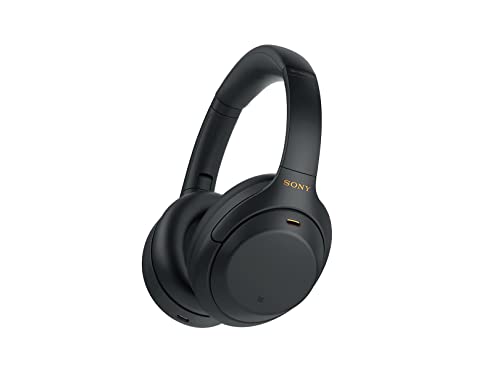
Sony WH-1000XM4 Wireless Premium Noise Canceling Overhead Headphones
ZOHAN EMO37 Noise Canceling Headphones

3M WorkTunes Connect Hearing Protection

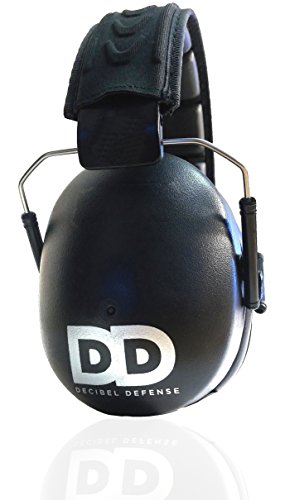
Decibel Defense Professional Safety Ear Muffs
Other options to consider
If you prefer not to use headphones, you may want to consider these other options that will work nearly just as well:
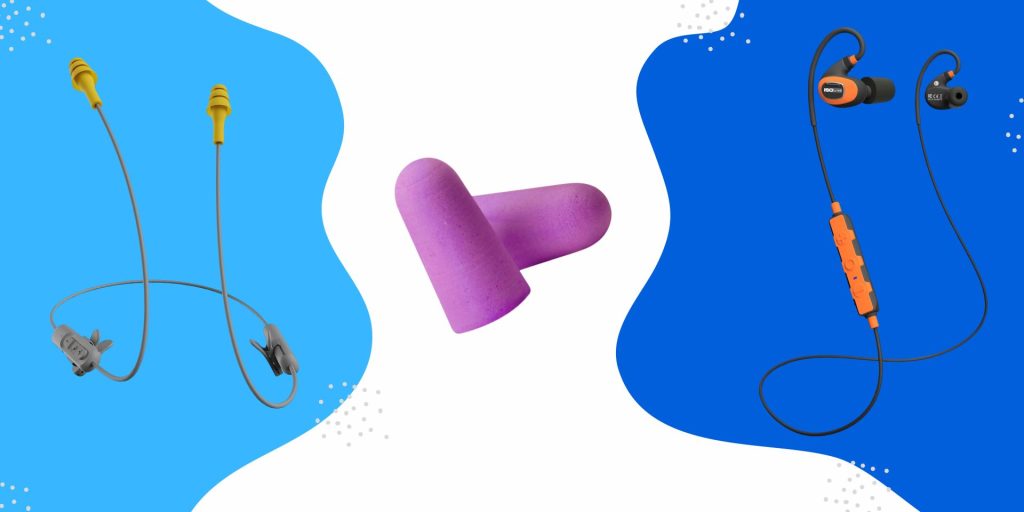
Flents Soft Foam Earplugs

ISOTunes Bluetooth Ear Plugs
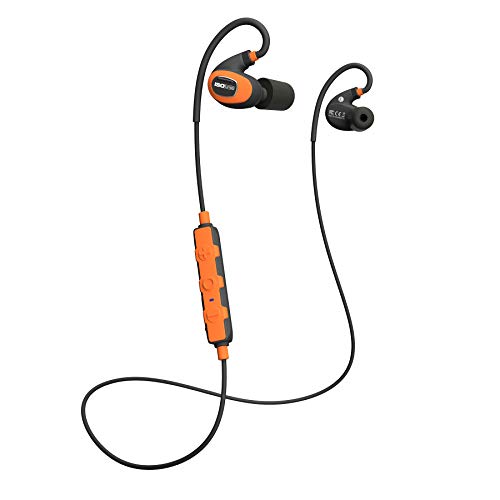
Elgin Ruckus Wireless Bluetooth Earplug Headphones

Tips for safe and effective use of mowing headphones
If you are using foam earplugs, they may be intended for single use. Depending on your wear time, you may be able to get a second or third use, but only if they are still soft and supple. If they are not resuming their shape or have any visible cracks, they should be discarded, and a new pair should be used.
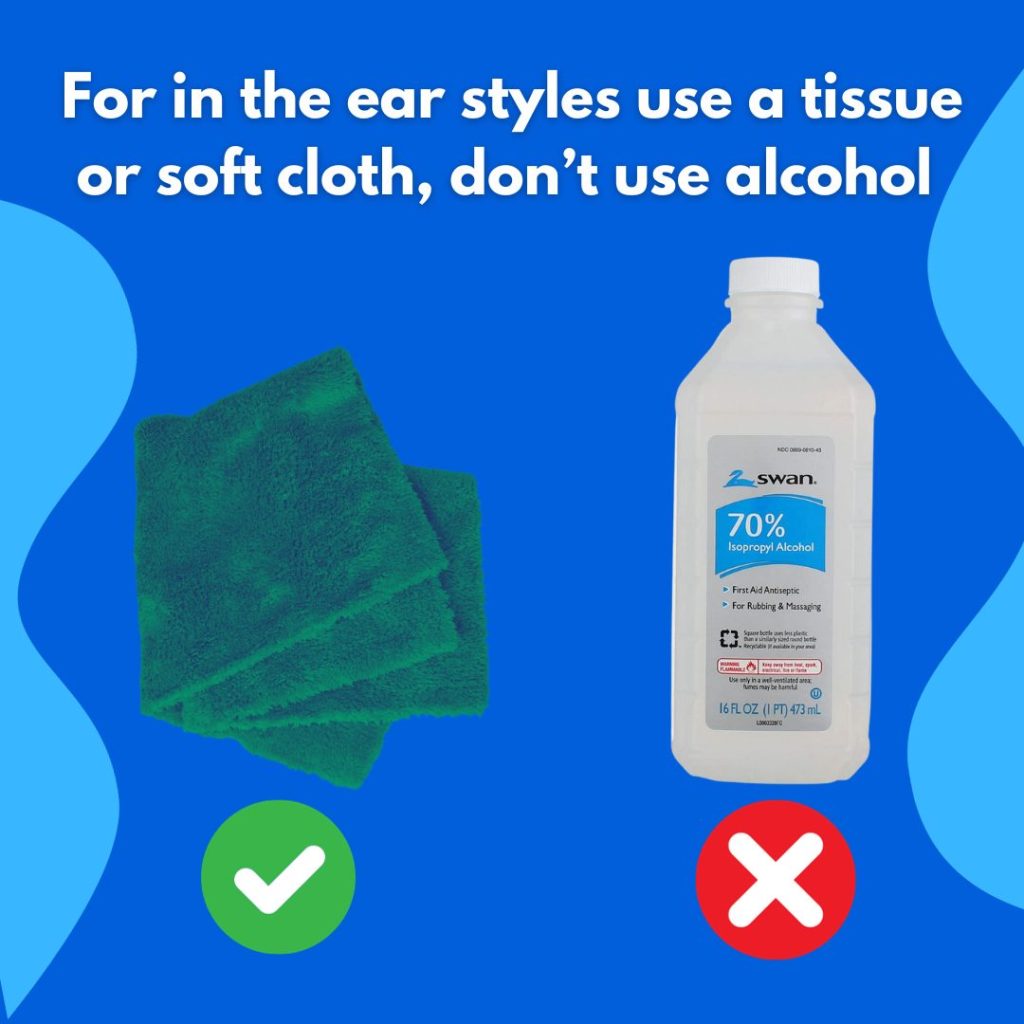
For in-the-ear styles, check to see if there is wax or other debris after using, and wipe with a tissue or other soft cloth. Try to avoid using alcohol or other chemicals which may break down the material.
Muffs should be gently wiped as well, and you can consider using disposable covers, particularly if there are several users of the devices. Your hearing protection should be stored in a safe, dry place. If you start to notice that your hearing protection is not providing the same level of attenuation that it did when new, it is time to replace it. If you experience tinnitus (ringing, buzzing) after mowing, it is an indicator that the level of attenuation is not adequate. Your hearing protection likely needs to be replaced or supplemented.
You should always prioritize your physical safety when choosing your hearing protection. Be aware of your surroundings and know whether the mower or landscaping tool you are working with requires some hearing to determine if it is functioning safely and appropriately; this includes push or riding mowers or other landscaping equipment.
The Bluetooth streaming options available from some of the headphones may seem appealing, but it is not always safe to have distracting audio present. Particularly if you have children or animals in the yard when you are mowing, make sure that you have a system in place for people to alert your attention.
You may develop some kind of enhanced visual cue system with your family members or neighbors for this reason.
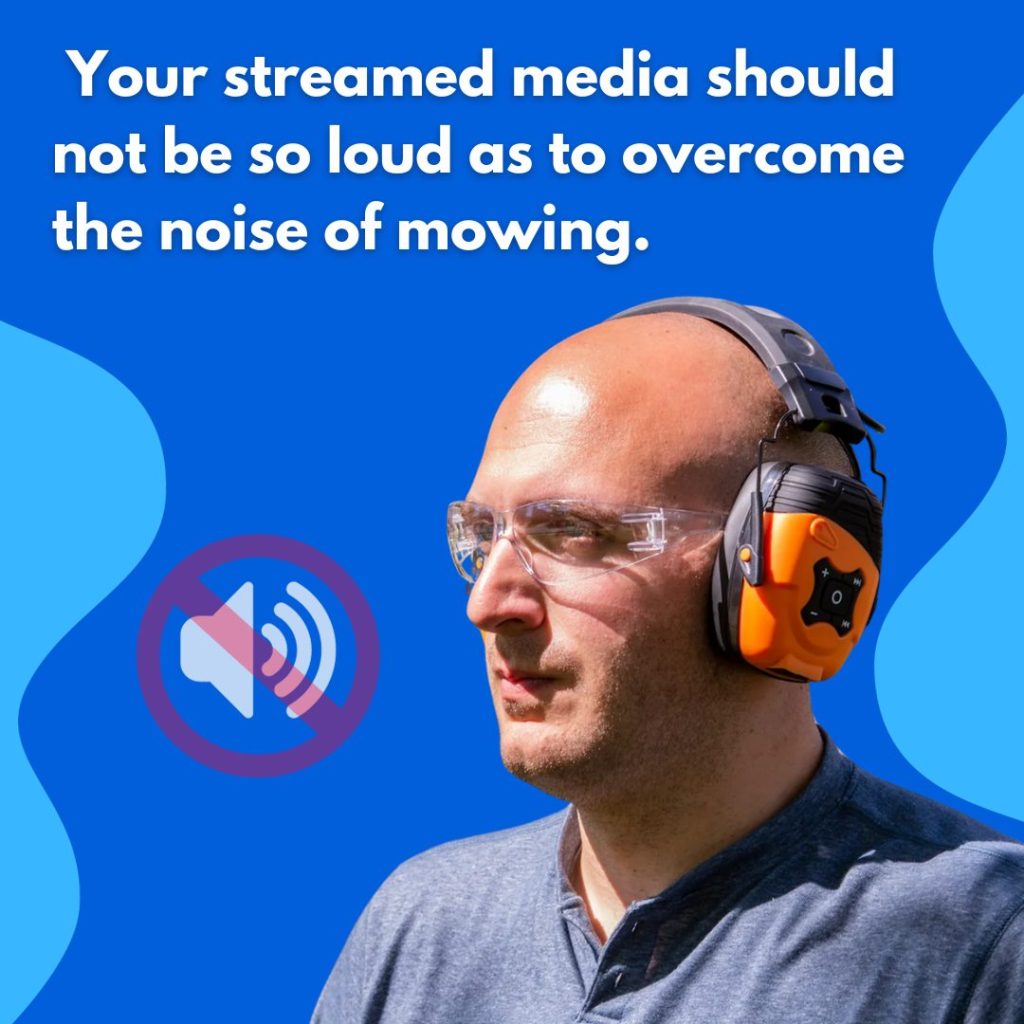
You want to ensure that your use of streaming does not cancel out the hearing protection. That is, your streamed media should not need to be so loud to overcome the noise of mowing. You will want to balance the volume control accordingly. Today’s smartphones can monitor the decibel level at which you are streaming music or media to inform you whether your levels are dangerously loud.
Conclusion
Mowing the lawn may be enjoyable for some and a necessary evil for others, but in either case, it is a loud activity. The noise generated by lawnmowers can approximate or exceed the level at which OSHA says it is dangerous to have sustained exposure. This is why the use of hearing protection during lawn mowing is essential.
Many consumers may be seeking devices that offer streaming capability in addition to hearing protection, and fortunately, there are several options available at a variety of price points. You can opt for something as simple as a (properly inserted!) single-use foam earplug or a high-end pair of Sony or Bose noise-canceling headphones that you will likely use while mowing but also while flying or working remotely. Be sure to seek out other articles on our page to find recommendations for noise-canceling devices for a variety of activities.

Erin Edwards received her Doctor of Audiology degree from Towson University in 2015 and her Ph.D. in Education and Leadership from Pacific University in 2022. She has worked with patients of all ages in a variety of settings and has a specific interest in cochlear implants, the relationship of hearing loss and dementia, and interdisciplinary healthcare.