



Hearing loss affects people of all ages, stages, and professions. One specific obstacle to hearing loss for medical professionals is the need to use a stethoscope. This used to be nearly impossible or, at a minimum, cumbersome and less than optimal. Fortunately, today’s technology allows people with hearing loss to use a stethoscope to evaluate and treat patients successfully and effectively.
This article will review the purpose and benefits of amplified stethoscopes and offer a list of the best amplified stethoscopes on the market. How can you turn up your heartbeat song a la Kelly Clarkson? Let’s explore.
What Is An Amplified Stethoscope?
Auscultation is the process of using a stethoscope to listen to the sounds of the body. This offers important information to medical professionals about respiratory functions, and if you’ve ever seen a doctor, you know that it is a routine part of an initial examination.
Body sounds are generally low frequency, with heart sounds between 70 and 120 Hz and lung sounds between 200 and 600 Hz. This is good news for many individuals with mild to moderate hearing loss, as these most often start and progress in the high frequencies.

Medical professionals who notice difficulty hearing in background noise might not have any initial trouble using their stethoscope. A regular stethoscope amplifies bodily sounds by using multiple reflections of sound waves in the narrow tube and directed straight to the ear drums. Individuals with more severe hearing losses, particularly in the low frequencies, will require a specialized device to make these sounds audible. The best-amplified stethoscopes will allow these professionals to perform auscultation accurately and confidently.
Can’t I Just Use My Hearing Aids With A Regular Stethoscope?
Unfortunately, no. Even if you use hearing aids to assist you in other areas of your life, they probably will not help you with a stethoscope. Hearing aids are designed to amplify the sounds of speech, which generally fall in the range of 250-8000 Hz. The diagram below shows where common sounds, including consonant and vowel sounds, fall in terms of frequency and intensity.

This makes hearing aids useful and effective in everyday life, and, in fact, in most cases, you wouldn’t want those ultra-low frequencies to be amplified. Imagine being able to hear a faucet dripping from the other room. Annoying! (Though, perhaps helpful if you forgot to shut it off).
How Does A Stethoscope Work?
There are two broad types of stethoscopes available: acoustic and electronic. Traditional stethoscopes are acoustic. They have a two-sided chest piece, which includes a diaphragm on one side and a bell on the other. The chest piece is connected to a hollow tube leading to earpieces in each ear. The provider can use the diaphragm side and/or the bell side against the chest to hear different bodily sounds.
An electric stethoscope also uses a diaphragm and a bell connected to a hollow tube, but an electronic amplifier is placed just below the earpieces to increase the volume of the sounds entering the stethoscope.

What Are The Benefits Of Amplified Stethoscopes?
An amplified stethoscope can provide improved sound quality and clarity of the body sounds utilized in differential diagnosis. They can offer professionals the ability to detect faint or ultra-low frequency sounds that are not otherwise audible, thus improving the sensitivity of detection of certain diseases or abnormalities.
Medical providers often work in less-than-optimal listening environments; an exam room during a routine physical might be quiet enough to use a stethoscope effectively, but a crowded emergency room probably is not. Using an amplified stethoscope would be critical in those environments.
In addition to increasing the volume, some of these electronic stethoscopes allow for recording via a complementary app, sometimes with a visual display of the recorded sounds, which can effectively aid and confirm what is heard.
What Are The Best Amplified Stethoscopes?

The best amplified stethoscope for you may differ from another provider. It will depend on comfort and fit, as well as what features (if any) you are seeking in addition to amplification. You may be seeking something that will connect to your hearing aids via Bluetooth; some patients do have good success with this method and prefer to have two devices (hearing aids and stethoscope earpieces) in their ears simultaneously or take their hearing aids in and out during different parts of an exam.
Here are some recommendations for the best amplified stethoscopes for hearing impaired on the market.


This offers up to 40 times amplification at the peak frequencies associated with heart and lung sounds. It also offers active noise cancellation for performing auscultation in less-than-desirable environments. Additionally, it can pair with an app for a visual display. Reviewers with and without hearing loss praise the clear sound quality and confidence in using the product.
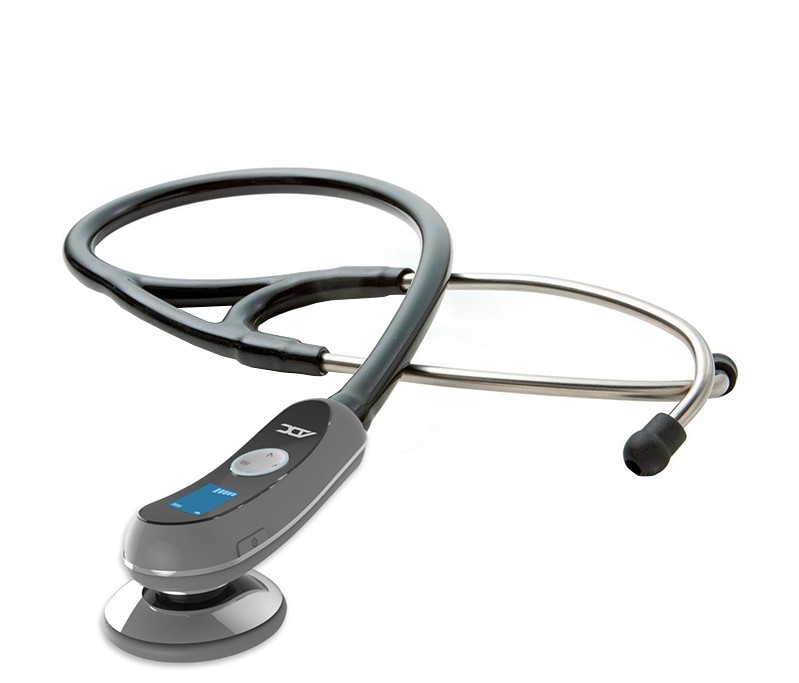
This device offers 18 times amplification with an adjustable frequency mode. It can be used for 20 hours on a single charge. It comes in four different colors with three sets of ear tips in varying sizes. User reviews state that it is very comfortable and user-friendly.
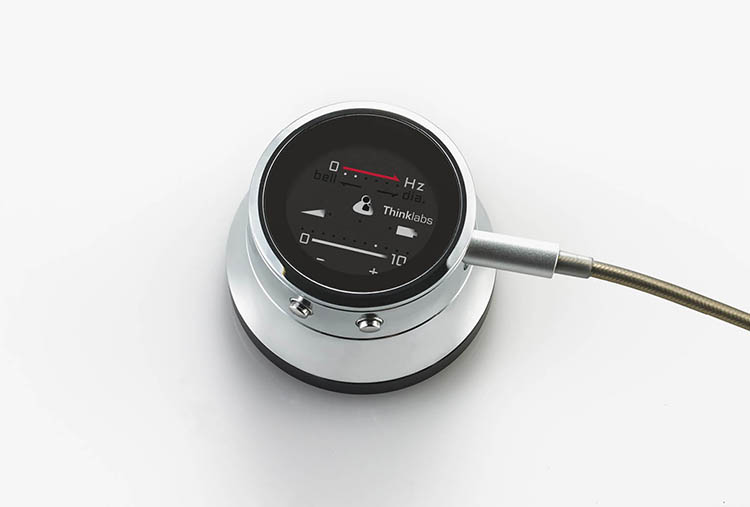
A very compact and powerful device, this offers 100 times amplification and comes with a carrying case, charger and cable, earbuds, and connection cables. User reviews tout the sound quality and durability and also rave about the company’s superior customer service.
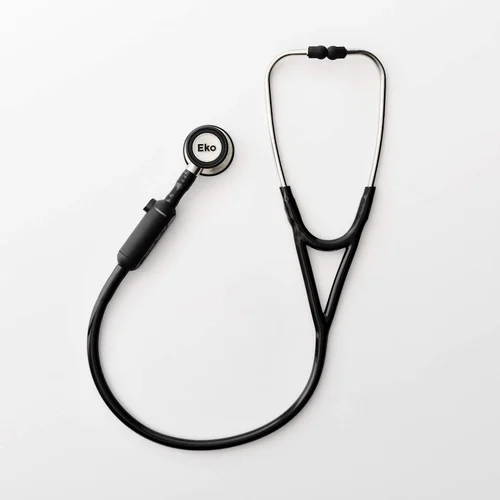
Offering 40 times amplification with seven volume levels, this stethoscope also provides a full-color display and active noise cancellation as well as Bluetooth functionality. Reviewers love the amplification, clarity, and filtering out background noise. It also looks quite futuristic with the display screen as well as the fully electric design.
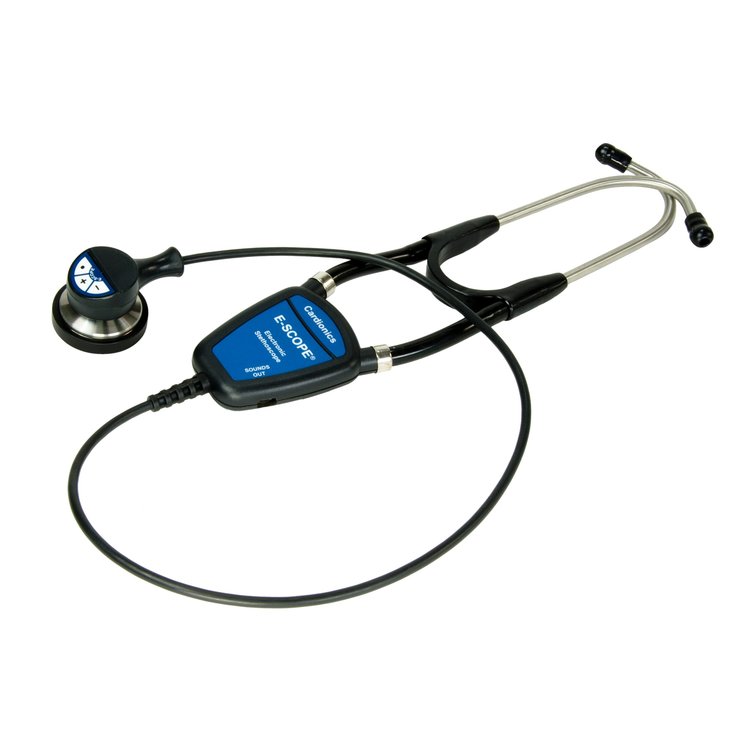
This electronic stethoscope allows for the amplification and recording of heart and lung sounds. It is also a great option for teaching as it has an auxiliary input to connect a second listener or recording device. It has also been tested for use in telemedicine with certain systems to perform auscultation over the phone. Reviewers found it comfortable and user-friendly.
What Are Options Aside From An Amplified Stethoscope?
- Some patients may try a separate, manual program with increased gain in the low frequencies. As mentioned, this may or may not be successful due to the frequency range utilized by the majority of hearing aids.
- Those who would like to use their hearing aids in conjunction with a stethoscope can use a special adaptor called a stethomate, which replaces the earpieces on the stethoscope and fits onto a completely-in-canal (CIC) or in-the-ear (ITE) hearing aid. This is a good option for patients who do not want to remove and re-insert their hearing aids to use a stethoscope.
- Professionals may also be able to connect a stethoscope to their hearing aids or cochlear implants via Bluetooth. It is possible that the low frequency will still remain an obstacle, but this is a great innovation for those whose hearing losses are too severe to utilize the amplification available from even the best amplified stethoscopes.
- Many of the best amplified stethoscopes described above include a visual readout, which can help corroborate results.

Conclusion
If you are a medical professional with hearing loss, you have many options to continue performing auscultation with confidence and accuracy. You should discuss with your provider to help determine which is the best amplified stethoscope for your needs and whether any specific features or additional products would be best to interface with your specific hearing aids.

Erin Edwards received her Doctor of Audiology degree from Towson University in 2015 and her Ph.D. in Education and Leadership from Pacific University in 2022. She has worked with patients of all ages in a variety of settings and has a specific interest in cochlear implants, the relationship of hearing loss and dementia, and interdisciplinary healthcare.