


In the early days, hearing aids mostly came in one color that was vaguely supposed to represent Caucasian skin but didn’t really match any person’s skin color. Today, hearing aid manufacturers have come a long way in providing a range of colors that more closely represent a range of skin and hair colors, as well as options for brighter colors for patients who want something that does not blend in.
This article will review some options for choosing hearing aid colors, whether you want your hearing aids to blend in or stand out.
The Psychology of Color
Color psychology as an area of scientific study is relatively new, but the general sense that color has a profound impact on our mood is not. Warm colors (red, orange, yellow) are often associated with feelings of happiness, love, and comfort but can also have associations with anger. Cool colors (blue, purple, green) generally evoke a sense of calm, pleasure, and relief but could also elicit sadness.
These are very personal and can vary from person to person or for cultural or religious reasons. For example, in some cultures, white is associated with purity and innocence, worn at baptisms and weddings, while in others, it symbolizes mourning and is worn at funerals. You might look around at the colors in your wardrobe and your home and consider how they make you feel and why you chose them.
What Are My Options for Hearing Aid Colors?
There are two main groups of people when it comes to choosing hearing aid colors: patients who want their hearing aids to blend in and be as invisible as possible and patients who want their hearing aids to stand out. There may be different reasons or motivations behind either of these, but the manufacturers are generally trying to cater to these two spectrums.
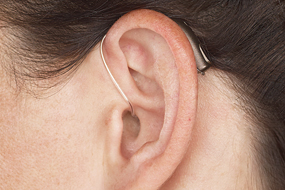
First, consider the style of hearing aids and how this dictates their visibility. The most common style of hearing aids is receiver-in-the-ear (RITE) or receiver-in-canal (RIC). These hearing aids sit behind the ear, with a thin receiver wire extending into the ear canal. With this style, it makes sense to try matching hair color if you try blending in.
In the photo below, you can see how this patient’s brown hearing aid is very close in tone to her hair color, so it blends in sitting behind her ear. Your audiologist or hearing aid dispenser will have handy hearing aid color chips that fit behind your ear so you can see exactly which one blends in best.
Likewise, if you are looking to make a statement with hearing aid color, you should choose something bright to make it more visible behind the ear. Sometimes, patients are seeking brightly colored hearing aids because of poor vision. The color makes the hearing aids easier to see when positioning them to insert or if they are accidentally dropped or misplaced.

Patients who choose an in-the-ear (ITE) hearing aid will likely want to match it to their skin rather than their hair. The image below shows a full-shell ITE hearing aid, but even the smaller devices, such as completely-in-canal (CIC), tend to come in skin tones.
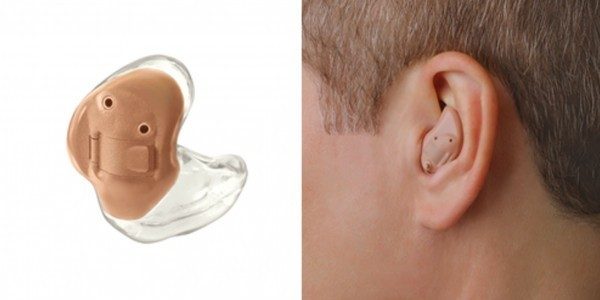
Image credit: Audibel Hearing Aids
This style of hearing aid is not available in the brighter colors, so if you are looking for rainbow shades, it makes more sense to opt for a RIC or a traditional behind-the-ear (BTE) hearing aid. The one exception is some CIC and invisible-in-canal (IIC) devices that come in red for the right ear and blue for the left ear. This would not be visible to the public but would help you to identify which hearing aid goes in each ear.

Image credit: Wall Street Journal
There is still a great deal of stigma surrounding hearing aid use, and patients often wait a long time before pursuing amplification because they are fearful about how it will make them look or how others will react. First, hearing loss is more conspicuous than even the brightest of hearing aids. People notice when you are struggling to communicate, and hearing aids can help to break down those barriers.
Many people happily embrace their hearing aids and still choose a style that is more neutral, but perhaps you can find other ways to advocate for yourself or educate others about hearing aids. Or, choosing a bright color that might prompt questions about hearing aids can be a good way to spark conversations about the best practices for conversation and communication partners.
There is a happy medium between skin or hair-toned hearing aids and a bright color, which are hearing aid accessories. There is a whole market of different stickers, such as Skinit, and Hearoes, that would allow you to change up the design of your hearing aids. There is also hearing aid jewelry! Additionally, if you are using BTE hearing aids, you can get ear molds in all kinds of bright colors, patterns, glitter, or glow in the dark. Many of these things are marketed toward the pediatric population, but there is no reason adults can’t wear them proudly!
Another in-between option would be to choose a metallic that does not match your hair color (i.e. silver hearing aids with brown hair). They will stand out a bit more but are still considered neutral. Or perhaps you want to go with white and blend in with all the folks out there walking around with AirPods in! There are a lot of choices to consider.
Which Manufacturers Make Colored Hearing Aids?
If you are a parent of a child with hearing loss, it is really important that you involve your child in the hearing aid color choice if they are at an age where it is appropriate. This helps children to take ownership of their hearing aids and to make them feel proud and confident to wear their devices. We want children to advocate for themselves, and there should not be any part of them that feels shame or embarrassment for wearing hearing aids. Some children may very well want devices that blend into their skin or hair, but it should be their choice.
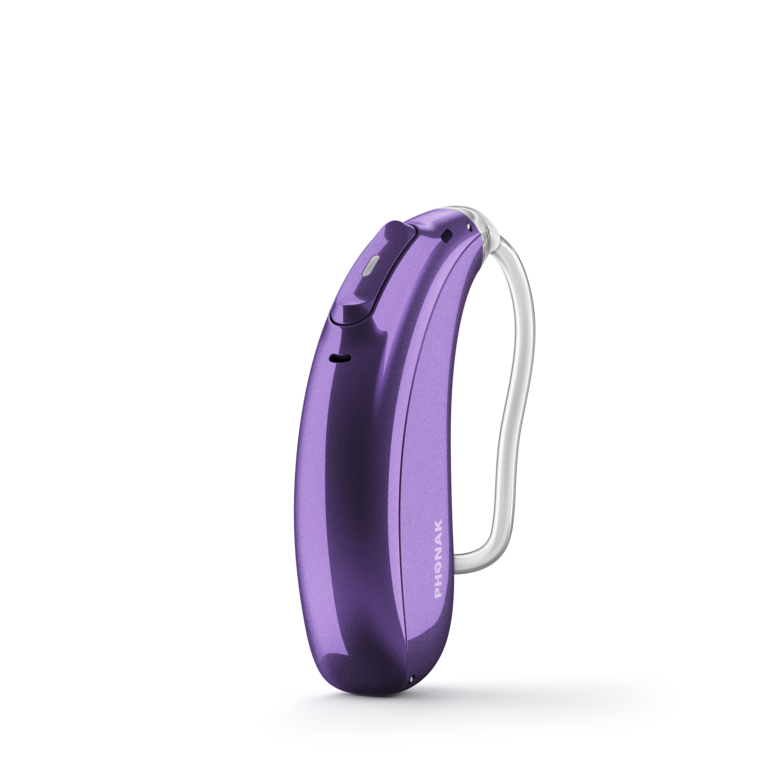
For obvious reasons, pediatric hearing aids have a wider range of bright colors than those catered to adults. Phonak and Oticon are the two leading manufacturers of pediatric hearing aids. The Phonak Sky Marvel line is a BTE hearing aid that comes in a variety of colors (six bright and eight neutral) for the body of the hearing aid, and seven color options for the ear hook. This way, patients can mix and match. This hearing aid would be best suited for patients with severe to profound hearing loss.

The Phonak Sky Lumity is a RIC device, also available in a variety of colors: six bright colors and eight neutrals.
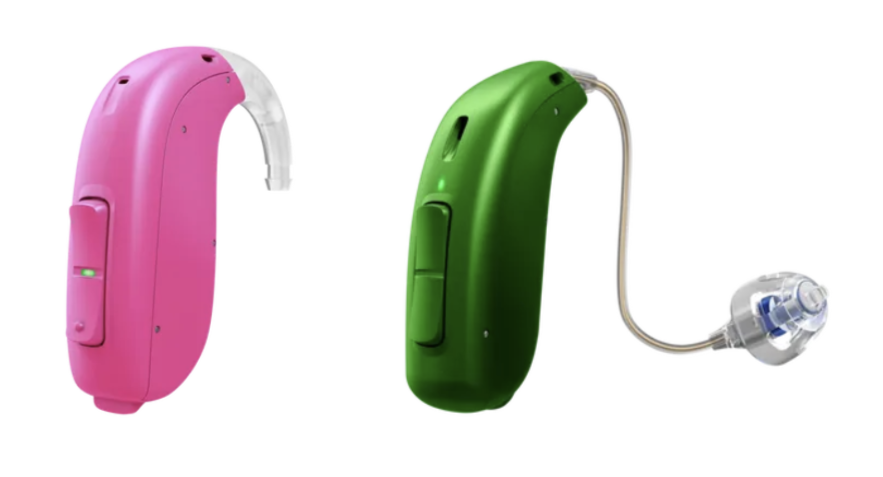
Oticon’s Opn Play also comes in RITE and BTE styles and is available in seven bright colors in addition to five neutral options.
Adults
For a long time, the only workaround to getting colorful hearing aids as an adult was to purchase something meant for children. This may still be an option, but you’ll have to check with your provider to see if they are willing and able to order you pediatric hearing aids. These devices are designed with children in mind and, therefore, have features that might be undesirable to adults, such as tamperproof battery doors and indicator lights. From a programming perspective, though, they can function comparably to adult hearing aids, and therefore, hearing performance would not be compromised.
Fortunately, there are some non-pediatric options for colorful hearing aids. The first is Widex. Their Moment line comes in nine neutral shades and four colorful options (pink, red, and two shades of blue). These are not pediatric hearing aids.

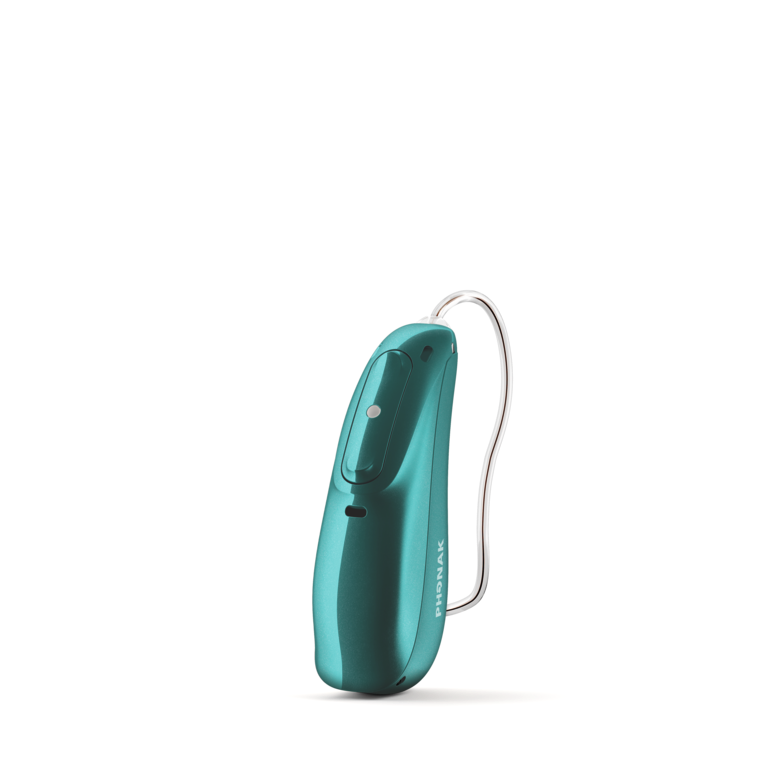
The Phonak Audeo Lumity RIC device comes in eight neutral colors, but is also available in pink, green, and blue.
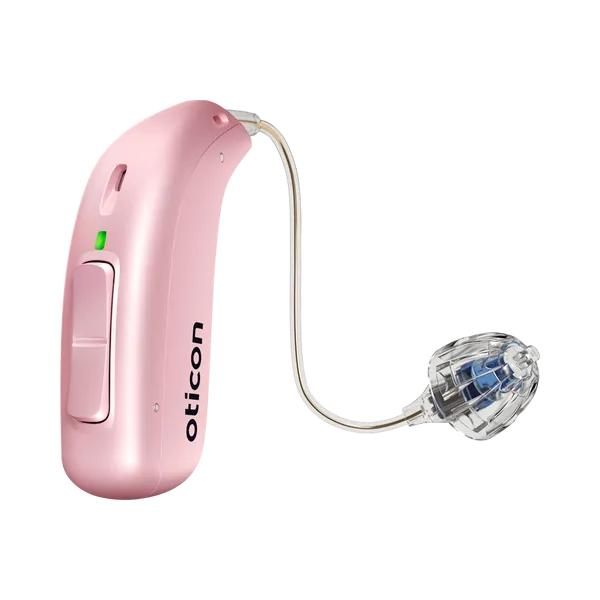
Similarly, the Oticon Real RITE hearing aid is available in pink and green, depending on the style.
How Should I Choose a Color?
If you’ve made the decision to pursue a hearing aid color other than one that matches your hair or skin, which color should you choose? First, confirm the brand of hearing aid that your audiologist or hearing aid dispenser is comfortable ordering for you based on your type and degree of hearing loss, as well as other features you might need.
Once you have the device narrowed down, you can look to see what your color options are. Maybe you’ve always had a favorite color or you want to choose something that represents your favorite sports team or alma mater. Keep in mind that you will probably have these hearing aids for at least three to five years, and you want to choose something that you aren’t going to tire of.
Think of it like buying a car; you want to be confident that you’re still going to like the color you chose in a few days, months, and years. Keep in mind that the surface area of your hearing aids is quite small relative to your body, so choose something that you like, and don’t concern yourself with what others might think.
Making a Statement with Bold Colors
As the images above display, there are many options out there for bright and bold hearing aid colors. There is a whole market, particularly on Etsy, for hearing aid stickers. This is a great way to add personality to your hearing aids that is both inexpensive and temporary. There are stickers in every color and pattern, with different characters, logos, and mascots. If you can dream it, there’s a sticker for it!
Drawing attention to your hearing aids can also draw attention to your hearing loss in a positive way. People may ask questions, which can lead you to be an advocate for yourself and explain how your hearing aids work. This is a great opportunity to talk about strategies for communicating with someone with hearing loss, such as ensuring you have the person’s attention before you start talking to them, maintaining eye contact, and trying to choose settings with minimal background noise when possible. You can also talk about the amazing technology in hearing aids now, such as rechargeability and Bluetooth streaming capabilities.
The general public may not know how far the hearing aid technology has come. This can help to eliminate some of the stigma about hearing aids only being for “old” people- there are a lot of advantages to wearing hearing aids in daily life. If you are looking for fellow individuals who are equally loud and proud about their hearing loss, there is a huge community of Deaf influencers who you can look to for inspiration, and you can find them through multiple channels. Social media platforms such as Facebook, Instagram, and TikTok are places to find new talent.
The Mind Hears is a USA-based blog written by a collective of Deaf and hard-of-hearing authors. Shari Eberts writes a blog called Living with Hearing Loss. For the less tech-savvy, seek out your local chapter of the Hearing Loss Association of America (HLAA). If you are a cochlear implant candidate, you should also contact the three cochlear implant manufacturers (Advanced Bionics, Cochlear, and Med-El) because all three have localized groups of candidates, recipients, and family members.
Hearing Aid Colors Conclusion
In the grand scheme of things, the color of your hearing aids may seem trivial. But often, the hearing aid choice is dictated by a number of objective factors: your type and degree of hearing loss, your audiologist’s comfort level and preferences for certain manufacturers, and the price point where you feel comfortable.
The hearing aid color might be one of the only decisions that is solely yours! Whether you decide you want your hearing aid color to blend in with your hair, represent your favorite professional sports team, or just be a nice bright addition to your outfit, you can’t make the wrong choice.

Erin Edwards received her Doctor of Audiology degree from Towson University in 2015 and her Ph.D. in Education and Leadership from Pacific University in 2022. She has worked with patients of all ages in a variety of settings and has a specific interest in cochlear implants, the relationship of hearing loss and dementia, and interdisciplinary healthcare.