


Tinnitus (pronounced TIN-nuh-tuhs or tin-NYE-tuhs, both are correct!) is any form of noise a person hears that is not present in the environment or attributable to an external source. Many people describe it as a ringing or buzzing sound, but it can take many forms. If you have ever attended a concert and noticed your ears are ringing during the quiet car ride home, you have experienced tinnitus. It is common to have intermittent episodes of tinnitus, particularly after exposure to loud noise, but some individuals experience it constantly. The main cause of tinnitus is hearing loss, though it can also be caused by certain medications or medical conditions, stress, head trauma, and excessive ear wax, among others. In this article, we will discuss what Tinnitus is, how to treat it, and the 7 best recommendations bone conduction headphones for tinnitus.
Tinnitus has actually been compared to phantom limb pain as it relates to hearing loss (Bartels, Staal & Albers, 2007). For individuals with hearing loss, the hair cells in the inner ear that are responsible for specific pitches have been damaged beyond repair. However, there is still some perception of the sound(s) being perceived by the individual. This is particularly common in people who have hearing loss caused by significant noise exposure over time, such as truck drivers or construction workers.
There is no miracle cure for tinnitus, so don’t let ads for herbal remedies fool you. There are two main recommendations for patients who suffer from tinnitus. The first is to try to manage the emotional response to the tinnitus. Research has shown that tinnitus is highly linked to the limbic system, which means that tinnitus can trigger a stress response, and then the stress response can exacerbate the tinnitus (Kraus & Canlon, 2012). It’s a vicious cycle: the more you feel stress or annoyance about your tinnitus, the worse it becomes (it can also raise blood pressure). Some patients have found success with therapy or meditation techniques that focus on stress and emotional management rather than anything specific to their tinnitus.
The second recommendation for tinnitus is to introduce other sounds into the environment to “mask” the sound of their tinnitus, which makes it less noticeable and (hopefully) less bothersome. For individuals with hearing loss, this often means a recommendation for hearing aids that can offer relief. With appropriately fit hearing aids, patients will be able to hear sound that they previously could not, which can help to distract from the tinnitus. Some hearing aids also offer a specific tinnitus masking feature, where patients can choose a sound or melody to softly play through their hearing aids in addition to the prescribed amount of amplification. For others, particularly those with tinnitus who are not candidates for hearing aids, it is recommended to try to avoid being in quiet, which might mean sleeping with a sound machine or trying to listen to music (at a safe volume!) during other quiet moments.
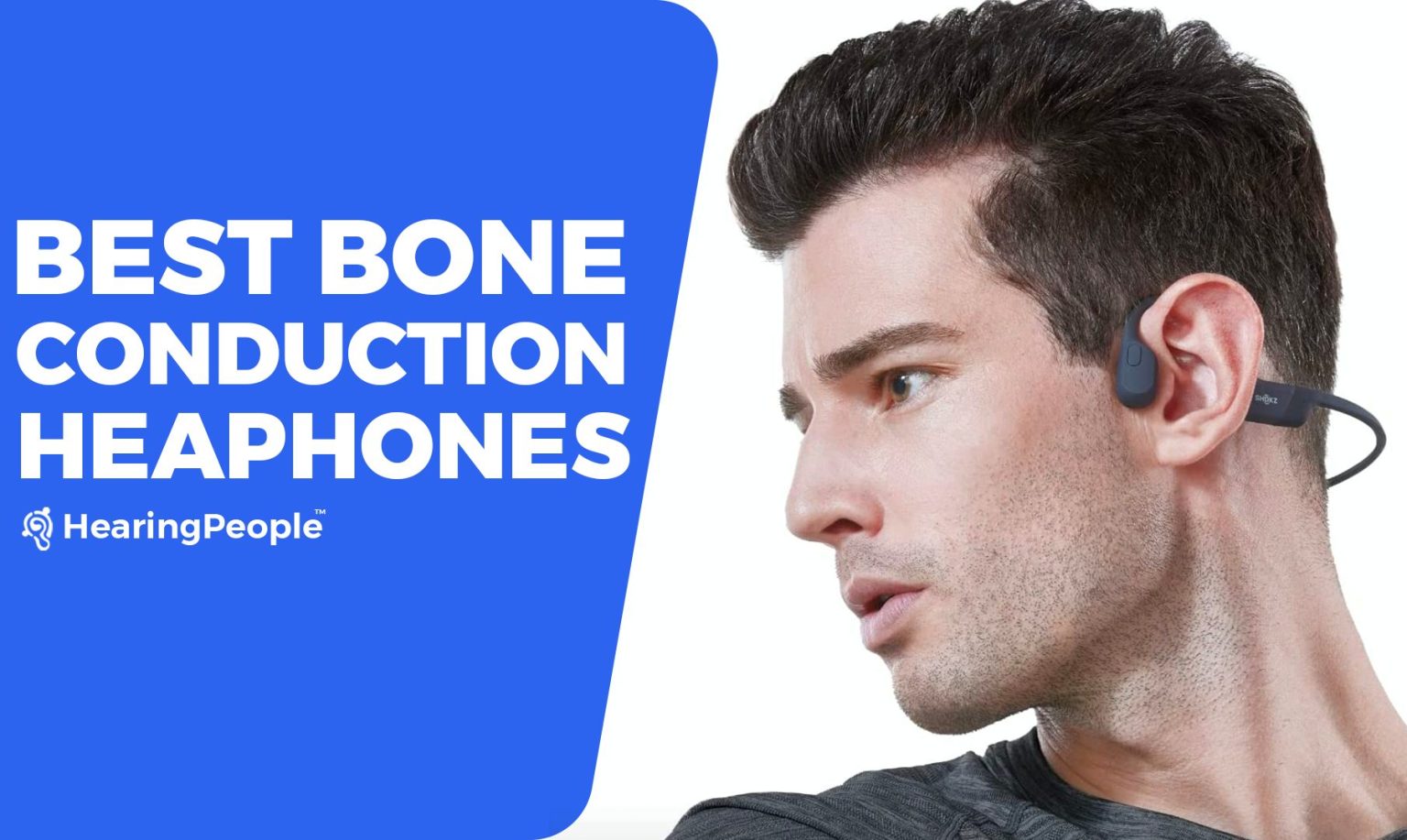
Many individuals have found relief from wearing bone conduction headphones for tinnitus. Bone conduction is the hearing pathway beyond the outer and middle ear when the inner ear (cochlea) is directly stimulated by vibrations in the temporal bone. You may have noticed that when you cover your ears and speak, you can still hear your own voice but perhaps no other voices or sounds in your environment. That’s because your own voice can be heard via bone conduction.
Bone conduction headphones sit on your temporal bone rather than over or inside your ear canal, and they transmit whatever you are listening to via those vibrations. It can be a funny sensation to get used to, but many people love having their ears unobstructed for comfort or safety reasons. Additionally, it is a way for those who suffer from tinnitus to introduce some environmental noise through their ears while also listening to music, books, or podcasts through their headphones. Multiple competing sound sources for that annoying tinnitus!
If this has you convinced to try bone conduction headphones for tinnitus, here are some of the best sets to try at a variety of price points:
7 Best Bone Conduction Headphones for Tinnitus
1. AfterShokz Titanium Bone Conduction Wireless Bluetooth Headphones ($139, Amazon.com)


With over 6,000 reviews on Amazon, these have nearly 5 stars and seem worth the higher price point. They are lightweight, Bluetooth compatible, last for approximately 6 hours on a charge, and have an IP 55 rating which makes them relatively resistant to sweat and debris.
Reviewers say they are comfortable and that the audio quality is great. The cons? The microphone quality is not the best when using these for phone calls, particularly if there is background noise present. Other reviewers had difficulty wearing them at the same time as glasses or a hat, and also stated that they don’t stay on while lying down.
2. Kimwood Bone Conduction Headphones ($39.99, Amazon.com)

These headphones come at a much lower price point than the AfterShokz, and still earned 4 stars with over 1,000 reviews. Many reviewers mentioned they are comfortable to wear, have good battery life, and are also easy to pair via Bluetooth and then maintain a steady connection.
Some reported they were bothered by the vibration sensation and stated that they didn’t experience this with some of the more expensive brands. Other reviewers were pleased with the design and sound quality but wished the volume range was a bit higher. This point might be particularly relevant if you are experiencing tinnitus with some degree of hearing loss.
3. ZKAPOR Premium Bone Conduction Headphones ($24.99, Amazon.com)

Another low-cost option with great reviews for those who might want to experiment with bone conduction headphones. Reviewers mentioned they are comfortable to wear with good battery life, but some were concerned about the durability and stated the overall sound quality wasn’t as high as with some other brands.
4. SHOKZ OpenRun Pro ($179.95, Amazon.com)

Happy reviewers raved about the comfort, sound quality, battery life, and functionality of the SHOKZ app. This pair is at the high end of the cost spectrum, and some reviewers didn’t like that there is a proprietary charger. They come in two sizes (mini and standard) and many mentioned that the “mini” size was appropriate for their adult-sized heads and recommended it over the “standard” size.
5. PURERINA Bone Conduction Headphones ($39.99, Amazon.com)

Reportedly very lightweight and comfortable, these headphones are also durable against sweat for those who wear them for exercise. Reviewers also love that they are charged with a standard USB-C charger compared to other models that use a proprietary charger. However, some reviewers mentioned issues with an inconsistent Bluetooth connection.
6. Tayogo Bone Conduction Headphones ($39.99, Amazon.com)

Named by GearJunkie as the best budget bone conduction headphones, these reportedly don’t have the same caliber of sound quality as those from Shokz, but they are comfortable and stay in place during vigorous exercise. Like some of the other options at a lower price point, some reviewers noticed the vibrating/tickling sensation that can occur with bone conduction headphones. Other reviewers stated that this pair wasn’t as durable but reported buying multiple pairs because they loved the sound quality and fit at the price point.
7. Yosint Open Air Wireless Headphones ($39.99, Amazon.com)
While these headphones don’t use traditional bone conduction technology like the options listed above, they do fit the bill for leaving your ear canal unobstructed. Some users might like the individual right and left style compared to those with a band around the back of your head. Reviewers mentioned they were comfortable and had good sound quality but stated that the microphone quality isn’t the best for phone calls and that they are tricky to remove from the case.
Conclusion
Overall, it is important to remember that bone conduction headphones for tinnitus work quite differently from regular headphones, so you should expect a change in sound quality and overall feel on your ears/head. There were reviewers of all the options listed above who mentioned that the headphones were not noise-canceling (they can’t be, if your ear canals are left open!) and that the sensation of hearing via bone conduction took some getting used to. Bone conduction headphones are a great option to explore if you are looking to introduce some sound to alleviate your tinnitus while leaving your ears unobstructed.
Additionally, whatever you are listening to (music, podcast, book, meditation) may serve the dual purpose of lowering your stress level and introducing a distracting sound from your tinnitus. Most importantly, if you are struggling with your tinnitus be sure to consult your primary care provider and see an audiologist for a hearing test.
References
Bartels, H., Staal, M.J., & Albers, F. W. J. (2007). Tinnitus and neural plasticity of the brain. Otology and Neurotology, 28, 178-184.
House, J. W. & Brackmann, D. E. (1981). Tinnitus: Surgical treatment. Ciba Found Symp, 85, 204-216.
Kraus, K. S., & Canlon, B. (2012). Neuronal connectivity and interactions between the auditory and limbic systems. Effects of noise and tinnitus. Hearing Research, 288(1-2), 34-46.

Erin Edwards received her Doctor of Audiology degree from Towson University in 2015 and her Ph.D. in Education and Leadership from Pacific University in 2022. She has worked with patients of all ages in a variety of settings and has a specific interest in cochlear implants, the relationship of hearing loss and dementia, and interdisciplinary healthcare.