


When we think about hearing problems, tinnitus is a term that often comes to our minds. And when it comes to balance disorders, vertigo is a term that we frequently hear. Usually, the question arises: can tinnitus cause vertigo? Understanding both conditions individually can help us understand their potential connection.
Tinnitus, at its core, is the perception of noise or ringing in the ears when no external sound is present. It’s a common condition and can range from a mild annoyance to a severe disruption in daily life. Tinnitus balance issues can sometimes accompany this condition, causing sufferers to question its link to other disorders. On the other hand, vertigo is a sensation that either you or your surroundings are spinning or moving when neither is actually moving. Imagine the dizzying feeling you get after spinning around multiple times, and you have a basic idea of what vertigo feels like. It can be unsettling and can lead to problems with balance and coordination.
With both tinnitus and vertigo having significant impacts on an individual’s daily routine, it is of interest to explore their potential relationship. Can tinnitus cause vertigo? Or are there underlying conditions that trigger both? In the next paragraphs, as we discuss these disorders, we’ll examine their shared symptoms and the science behind their connection.
Understanding Tinnitus and Vertigo
Let’s now discuss whether can tinnitus cause vertigo, by providing more details about the distinct characteristics of each condition.
Tinnitus typically manifests as a persistent ringing, buzzing, hissing, or clicking in the ears. For some, it’s a low-pitched hum, while for others, it may be a high-pitched whine. The causes of tinnitus vary. It can emerge due to prolonged exposure to loud noises, which is why, for example, many musicians and construction workers often report the condition. Age-related hearing loss, earwax blockage, and ear bone changes are other common culprits. More rarely, tinnitus can result from Meniere’s disease, which links tinnitus balance problems with vertigo.
Vertigo, in contrast, creates a false sense of movement. Individuals with vertigo often feel as though they, or their surroundings, are spinning, tilting, or swaying. This sensation can be accompanied by nausea, vomiting, headache, or a feeling of being unbalanced. The primary causes of vertigo include benign paroxysmal positional vertigo (BPPV), where tiny calcium particles become lodged in the inner ear, infections such as vestibular neuritis or labyrinthitis, and Meniere’s disease. Meniere’s disease is particularly significant in the discussion of whether can tinnitus cause vertigo, as it is an inner ear condition that can lead to both tinnitus and vertigo.

Recognizing the shared symptoms between tinnitus and vertigo is crucial. While tinnitus primarily affects hearing with its phantom sounds, it can also bring about dizziness or tinnitus balance issues; therefore, the answer to the question, “Can tinnitus cause vertigo?” is yes. Conversely, while vertigo impacts one’s sense of balance, it can sometimes be accompanied by tinnitus or ringing in the ears. It is evident that there is some overlap in symptoms between these two conditions, and in the next paragraph, we will discuss the connection between tinnitus and vertigo.
The Connection Between Tinnitus and Vertigo
Tinnitus and vertigo are both symptoms that can be related to the inner ear, and there is a growing body of research that suggests a potential link between the two. Below, we highlight some key points for the connection between tinnitus and vertigo.
- Inner Ear Disorders: Many inner ear disorders can lead to both tinnitus and vertigo. For instance, Meniere’s disease, a disorder of the inner ear, can cause both ringing in the ears (tinnitus) and episodes of vertigo. The exact cause of Meniere’s disease is still unknown, but it is believed to be related to a buildup of fluid in the inner ear.
- Vestibular Migraine: Vestibular migraine is another condition that can cause both tinnitus and vertigo. It’s a type of migraine that may or may not cause a headache but can cause dizziness, vertigo, and ringing in the ears.
- Neurological Connections: Some studies suggest that there might be a neurological connection between tinnitus and vertigo. The auditory and vestibular systems of the inner ear are closely connected, and any disruption in one can potentially affect the other.
- Treatment Implications: Understanding the connection between tinnitus and vertigo is crucial for treatment. Some treatments that help alleviate tinnitus might also be beneficial for vertigo and vice versa. For instance, certain types of physical therapy designed to help vertigo patients might also help those with tinnitus.
In [1], a study conducted by Masatoshi Miura and colleagues at Hino Municipal Hospital aimed to understand the combined effects of these two symptoms (tinnitus and vertigo) on patients’ perceived handicap, psychological distress, and overall quality of life. Here, we provide a short overview of the study.
- Study Overview: The study involved 736 patients who visited Hino Municipal Hospital with complaints of either tinnitus or dizziness. These patients were categorized into three groups: those with both tinnitus and dizziness (group B), those with only tinnitus (group T), and those with only dizziness (group D). Various assessments, including the Tinnitus Handicap Inventory (THI) and Dizziness Handicap Inventory (DHI), were used to determine the impact of these symptoms on the patients.
- Findings: The study found that patients with both tinnitus and dizziness experienced a more significant handicap from tinnitus than those with tinnitus alone. Interestingly, the handicap from dizziness did not differ between patients with just dizziness and those with both symptoms. This suggests that the presence of dizziness has a more profound impact on the physical quality of life in patients with tinnitus than the combined effect of both symptoms.

- Physical Health and Quality of Life: Tinnitus can be perceived both during rest and physical activity, while dizziness mainly occurs during physical activity. This distinction might explain the differences in physical health-related quality of life observed between the groups.
- Considerations in Clinical Practice: The study emphasizes the importance of considering both tinnitus and dizziness when treating patients. Often, physicians might focus on only one primary complaint, potentially overlooking the compounded effects of both symptoms on a patient’s well-being.
In conclusion, while tinnitus and dizziness can manifest independently, their combined presence can exacerbate the perceived handicap, especially from tinnitus. This study underscores the importance of a holistic approach in clinical practice, ensuring that both symptoms are adequately addressed to improve patients’ quality of life.
Another study [2] discusses the intricate relationship between tinnitus and vertigo, tracing its roots back to ancient civilizations. The Greeks and Romans were already familiar with individual vestibulocochlear symptoms. Archigenes, a physician from antiquity, provided what is believed to be the earliest description of Ménière’s disease, a condition characterized by paroxysmal vertigo, tinnitus, headache, and hearing loss. His writings, preserved through the works of Galen and Rhazes, highlighted a unique clinical tetrad that grouped these symptoms together.
Archigenes identified two distinct types of vertigo, and while it’s challenging to align them with modern classifications of vertigo, it’s believed that the type associated with tinnitus likely pointed to a pathology in the vestibulocochlear nerve or inner ear. While Archigenes couldn’t pinpoint the exact cause of the condition, his methodical approach to understanding vestibulocochlear symptoms laid foundational stones for modern medicine and the current achievements with respect to understanding and managing better tinnitus and vertigo.
Coping Strategies: Navigating Through Tinnitus and Vertigo
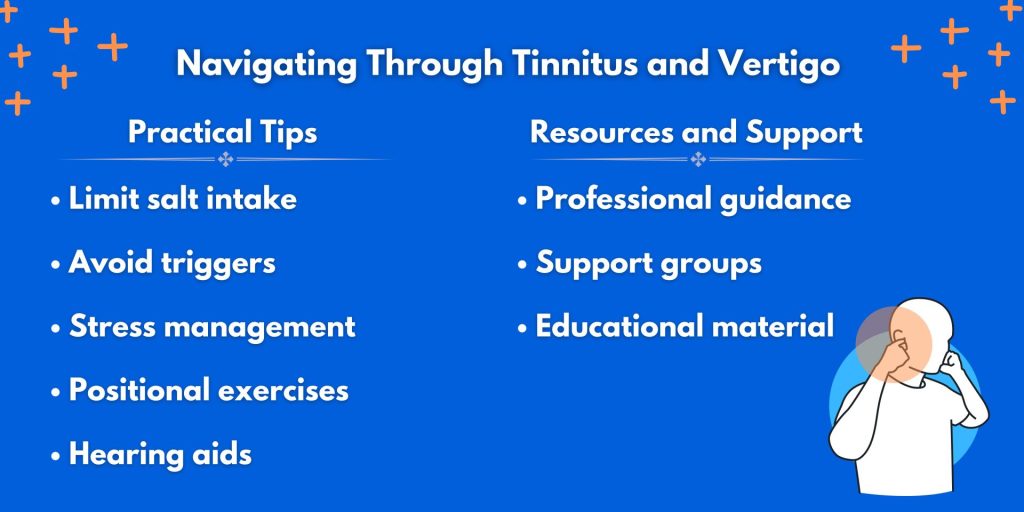
Living with both tinnitus and vertigo can be challenging, but with the right strategies, one can alleviate the symptoms and lead a more comfortable life. Addressing the question of can tinnitus cause vertigo is essential, but equally crucial is knowing how to cope with these conditions.
Practical Tips for Tinnitus and Vertigo:
- Limit Salt Intake: A reduced sodium diet can help decrease inner ear fluid buildup, which is beneficial for those with Meniere’s disease.
- Avoid Triggers: For some, caffeine, alcohol, or specific foods might exacerbate tinnitus and vertigo symptoms.
- Stress Management: Stress and fatigue can aggravate tinnitus. Activities like meditation, deep breathing, and regular exercise can be beneficial.
- Positional Exercises: For vertigo caused by BPPV, specific maneuvers like the Epley maneuver can help in repositioning the tiny calcium particles in the inner ear.
- Hearing Aids: For those with tinnitus stemming from hearing loss, hearing aids might provide relief.
Resources and Support for Tinnitus and Vertigo:
- Professional Guidance: If unsure about the link between tinnitus and vertigo in your specific situation, it’s always advised to consult an audiologist or an otolaryngologist.
- Support Groups: There are numerous support groups, both online and offline, where individuals share their experiences and coping mechanisms about tinnitus balance issues and vertigo.
- Educational Material: Plenty of books, websites, and workshops provide information and insights into the topic of tinnitus and vertigo, ensuring individuals are well-informed and prepared.
Can Tinnitus Cause Vertigo? Takeaway
The relationship between tinnitus and vertigo has been a subject of interest for both medical professionals and those who experience these conditions. As we’ve explored, tinnitus, characterized by a persistent ringing or buzzing in the ears, and vertigo, the sensation of spinning or dizziness, both have roots in the inner ear’s complexities. Studies, such as the one conducted by Masatoshi Miura and colleagues at Hino Municipal Hospital, have shed light on how these conditions can exacerbate each other, especially when they coexist. The research underscores that the handicap from tinnitus is intensified by the presence of dizziness. However, the reverse, where tinnitus intensifies the handicap from vertigo, is not observed to the same degree.
The question, “Can tinnitus cause vertigo?” has been addressed, and while the two can coexist and influence each other, it’s essential to understand that they can also manifest independently. The overlap in symptoms between tinnitus and vertigo emphasizes the need for a comprehensive approach to diagnosis and treatment.

For those struggling with the challenges of tinnitus and vertigo, it’s crucial to remember that you’re not alone. The medical community continues to research and understand these conditions better, leading to improved diagnostic and therapeutic strategies. If you or someone you know experiences symptoms of tinnitus or vertigo, it’s important to seek professional help. Otolaryngologists and audiologists are equipped with the knowledge and tools to diagnose, manage, and provide support for these conditions. Furthermore, numerous support groups and resources are available, both online and offline, offering a platform for individuals to share their experiences and coping strategies.
In conclusion, while the connection between tinnitus and vertigo is complex, understanding this link is vital for effective treatment and management. Always prioritize your well-being and never hesitate to seek professional support when dealing with tinnitus and vertigo. The journey might be challenging, but with the right guidance and resources, a better quality of life can be achieved.
References:
[1] Miura M, Goto F, Inagaki Y, Nomura Y, Oshima T, Sugaya N. The Effect of Comorbidity between Tinnitus and Dizziness on Perceived Handicap, Psychological Distress, and Quality of Life. Front Neurol. 2017 Dec 22;8:722. doi: 10.3389/fneur.2017.00722.
[2] Wright, A.E., McFarland, J. & Shoja, M.M. Archigenes and the syndrome of vertigo, tinnitus, hearing loss, and headache. Childs Nerv Syst 37, 2417–2425 (2021). https://doi.org/10.1007/s00381-019-04343-5

Eleftheria's world revolves around sound - whether it's designing high-quality audio applications, crunching numbers in audio signal processing (DSP), decoding room acoustics, listening to music or crafting the latest hearing aid technology and new features. She has a professional career spanning over 15 years and a strong research record (over 40 articles and patents) and has been the driving force behind top-notch products at leading hearing aid and audio tech companies. But what really makes her enthusiastic is sharing what she knows. As an avid writer, she loves spreading the word on the science of hearing, hearing aids and health technologies. Her ultimate goal? To give people with hearing impairments the insights they need to live their best life.