


In our rapidly evolving digital landscape, television remains a dominant medium for entertainment, education, and news dissemination. However, for those struggling with hearing loss, watching TV with hearing aids can be a challenging task. Being hearing impaired is not something rare: The World Health Organization (WHO) states that over 5% of the world’s population – equating to around 430 million individuals – necessitates rehabilitation for their ‘disabling’ hearing loss. ‘Disabling’ in this context refers to a hearing loss exceeding 35 decibels (dB) in the better-hearing ear.
Alarmingly, by 2050, it’s projected that nearly 2.5 billion people will experience some degree of hearing loss. Out of these, at least 700 million will require hearing rehabilitation. The modern world also presents unique challenges, with over 1 billion young adults now at risk of permanent, avoidable hearing loss stemming from unsafe listening practices [1].
In the United States, the statistics are equally concerning. Of Americans aged 20–64 in need of hearing aids, only 16% utilize them [2]. Various impediments such as high costs, societal stigma, inaccessibility, and unsatisfactory customer experiences have traditionally deterred individuals from purchasing hearing aids. But the future looks more positive. Although the U.S. hearing aid market expanded by just 0.9% in 2022, a Compound Annual Growth Rate (CAGR) of 4.9% is forecasted until 2030. The retail sales of over-the-counter (OTC) hearing aids are poised to spearhead this anticipated growth [2]. Beyond sound amplification, consistent use of these devices promises profound improvements in hearing quality, psychological health, cognitive function, and overall quality of life.
In the backdrop of these pressing statistics, understanding the transformative power of hearing aids in refining the auditory experience, especially for activities like watching TV with hearing aids, is of great interest. This article discusses the multiple challenges faced by those with hearing loss, offers potential solutions, and underscores the enriching possibilities hearing aids could bring for those that like to watch television.
Understanding the Challenges of Watching TV with Hearing Aids
Television serves as an escape, a portal to the world, and a source of relaxation for many. However, for those with hearing impairments, the experience of watching TV can be less than seamless. For these individuals, watching TV with hearing aids, the challenge isn’t just about increasing the volume.
TV shows and movies come with dynamic audio ranges, encompassing from soft murmurs to resonating explosions. Such fluctuations can be problematic for those with hearing deficiencies. Critical dialogues, essential to the narrative, might get muffled by background scores or ambient sounds, causing them to miss out on pivotal plot moments. The swift pace of conversations, particularly in genres like comedy or action, can also be challenging to follow for those with hearing difficulties.
Modern TV designs contribute to the issue. Due to the sleek design of contemporary televisions, the speaker quality often suffers. The positioning of speakers on the sides or at the back can lead to distorted sound by the time it reaches the viewer. Moreover, many movies are sound-engineered for theater environments and don’t necessarily translate well to the acoustics of a standard living room.
Hearing aids, while valuable, don’t always offer a comprehensive solution for TV viewing. Those watching TV with hearing aids frequently mention a range of issues tied to their hearing aids during TV time. For example, the background sounds from the TV can sometimes trigger a whistling feedback in hearing aids. Furthermore, not all frequencies might be amplified equally by the hearing aid, resulting in some sounds being too pronounced while others remain faint.
The need to adjust the volume frequently, the difficulty in distinguishing dialogues from background sounds, and the need to perceive subtle audio elements are frequent concerns for hearing aid users when watching TV. However, with proper awareness and suitable modifications, these obstacles can be overcome, as will be discussed later in the article.
Optimizing the TV-Watching Experience
Television has long been a central pillar of modern entertainment and information. To ensure that this experience is as enjoyable and inclusive as possible, there are several considerations and adjustments that can be made, especially for people with hearing impairment.
Importance of Choosing TVs with Good Sound Performance
Firstly, it’s important to select televisions known for their superior sound performance. A TV with crisp, clear, and balanced audio can significantly help overcome the challenges faced by hearing aid users that are watching TV with hearing aids (or without). Investing in a television with a robust built-in sound system, or ones that come recommended for their audio capabilities, can transform the auditory landscape of what’s being watched.
Features that Enhance Sound Quality for Hearing Aid Users
When choosing a TV, it’s wise to consider features specifically designed to boost audio quality. Look for options such as clear voice technology, which emphasizes vocal clarity over ambient noise. Additionally, some of the latest TVs are equipped with sound equalizers, empowering viewers to tweak audio frequencies. This is particularly advantageous for those with specific hearing challenges, as they can fine-tune to accentuate sounds typically harder for them to perceive.
Assistive Listening Devices and Wireless Accessories
Beyond the television itself, there are a plethora of assistive listening devices available that can bridge the gap between standard audio outputs and the unique needs of hearing aid users. Some examples are:
- External Speakers/Soundbars: With the intrinsic speaker quality of modern TVs often lacking, external soundbars or speakers can deliver clearer and more engaging audio.
- Bluetooth Connectivity: Directly link hearing aids to the TV through Bluetooth. This setup essentially converts them into wireless headphones, offering a direct and personal audio feed.
- TV Streamer: These devices are invaluable, affording users greater control by streaming sound directly from the TV to hearing aids or cochlear implants.
- Hearing Technology, Loops, & Telecoils: Exploit advancements like hearing loops and telecoils for direct audio streaming. Devices such as neck loops can further enhance the auditory experience.
- AirPods Pro as Hearing Aids: Modern innovations now allow the AirPods Pro to be set up for personalized TV streaming when linked with a Bluetooth TV adapter


- Prime Video Dialogue Boost & Apple TV: Prime Video’s Dialogue Boost heightens the clarity of dialogues, overpowering background noises. The audio is AI-enhanced for crystal-clear reception. Apple TV, when paired with AirPods or certain MFi-compatible hearing aids, can further optimize the auditory experience.
- Wear TV Headphones: If you’re not using hearing aids but struggle with TV audio, TV headphones might be the perfect solution. Ranging from the EarTech TV to Sennheiser TV Clear, and the Behear smarto, these devices grant individualized control over audio settings.
- Closed Captions: An old but gold solution. Turn on closed captions to both hear and read the dialogue, ensuring no details are missed. Closed captions have evolved to be more than just an assistive tool; they’ve become a staple for many viewers, especially younger ones who multitask while watching TV. Innovative AR captioning glasses are now also available, projecting dialogues directly onto the lenses for real-time transcription.
Adjusting Hearing Aid Settings for Optimal TV Viewing
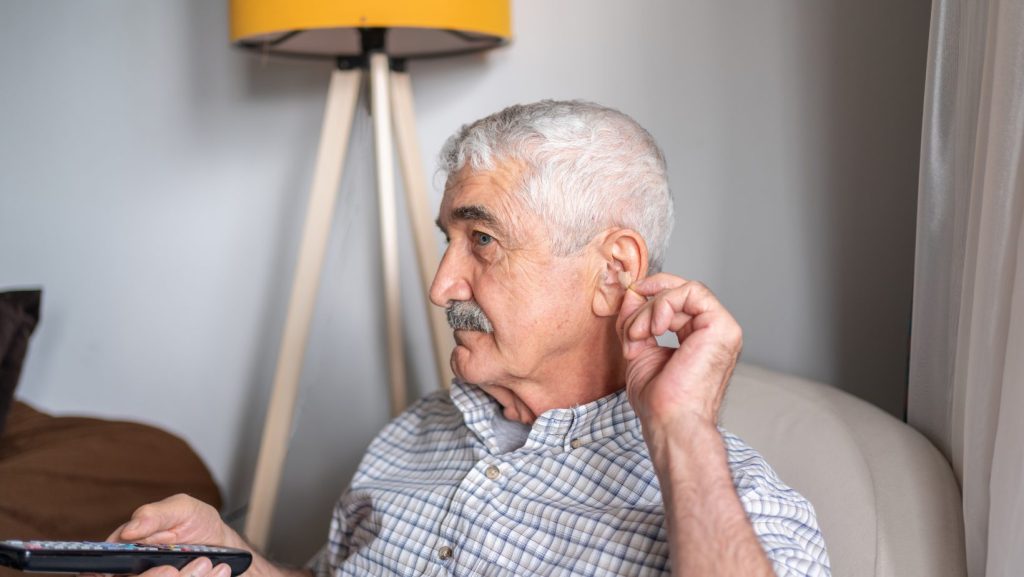
Modern televisions offer an array of settings and features to optimize the audio experience, which can be especially beneficial for those watching TV with hearing aids. Firstly, many TVs feature various sound modes, with one often labeled as ‘Clear Voice’—this mode prioritizes dialogue, ensuring voices are crisp and discernible. If you’re keen on refining the audio further, some TVs provide built-in equalizers, which can be adjusted to emphasize different audio ranges. By boosting treble, for example, higher tones like speech can be made clearer. Another notable feature is dynamic range adjustment. By selecting a narrow or ‘compressed’ range, you can minimize the volume disparity between the loudest and softest sounds, making for a more consistent auditory experience.
It’s also essential to note that while most TVs output audio in stereo, many receive signals intended for five-speaker surround-sound systems. The TV then downmixes these signals to suit stereo speakers. Ensure that this downmix is set to stereo to avoid misdirecting dialogue to non-existent speakers.
Lastly, some innovative technologies can further enhance your TV listening experience. Features such as independent volume control allow for simultaneous adjustments to both TV speakers and connected headphones. This ensures everyone can enjoy their preferred volume level. Automatic volume leveling is another useful feature, maintaining consistent volume even when there are abrupt changes, like during commercial breaks. And, with Bluetooth connectivity, TVs can wirelessly link to headphones, hearing aids, or loop systems, offering a more tailored listening environment. As we discussed above, when purchasing a new TV, it’s wise to prioritize these features to ensure an optimal auditory experience.
Additional Tips and Considerations
For those with hearing impairments, ensuring an optimal TV-watching experience is not just about entertainment but also about ensuring clear comprehension. It begins with consistently using hearing aids when watching television. Watching TV with hearing aids enhances and amplifies the sound emanating from the TV, making both dialogues and subtle background nuances more discernible. Forgetting or opting not to use the hearing aids can often result in unnecessary auditory strain and a decrease in comprehension levels.
Furthermore, the physical positioning of the viewer in relation to the TV is paramount. Sitting strategically at a distance where the television’s speakers are aligned directly with the ears can significantly enhance clarity. It’s beneficial to be directly in front of the screen, ensuring no objects or furniture obstruct the sound path, thereby offering an unadulterated auditory experience.
The environment in which one watches TV can greatly affect the sound quality. The room’s acoustics can either muddle or sharpen the sounds. Spaces with many hard surfaces, like tiles or glass windows, can cause sound waves to bounce around, leading to unwanted echoes and a dilution of sound clarity. By introducing soft furnishings, such as plush rugs, thick curtains, or cushioned sofas, these echoes can be minimized, thus improving the overall sound quality.
Additionally, one must be mindful of ambient noises. Common household sounds, like the hum of an air conditioner, the whirl of a ceiling fan, or even noises from the street, can intrude upon and diminish the TV’s audio clarity. Actively minimizing these, perhaps by closing windows or using silent mode appliances, can make a world of difference.
In essence, an optimized TV-watching experience for those with watching TV with hearing aids is a combination of device calibration, strategic positioning, and environmental adjustments. By paying attention to these factors, viewers can enjoy their favorite shows and movies with enhanced clarity and understanding.
Technology Advancements and Future Trends
The merger of audiology with multimedia entertainment technology has brought and will bring groundbreaking advancements, particularly beneficial for those watching TV with hearing aids. A standout advancement is Bluetooth connectivity’s integration into hearing aids, allowing users to directly stream audio from TVs, smartphones, and other devices. This not only guarantees clarity but also promises a listening experience tailored to the individual, free from external noise distractions. It’s a step that further intertwines traditional hearing solutions with the modern multimedia age, making TV sessions more immersive for those with hearing aids.
Looking ahead, there are numerous technological innovations on the horizon that have the potential to redefine the experience of watching TV with hearing aids. For instance, the advancements of AI could lead to the development of intelligent hearing aids. These devices would have the capability to automatically detect and adjust their settings based on the audio profile of different TV shows. Whether it’s a dialogue-rich drama or an action-packed film, the hearing aid could optimize sound quality for a specific genre. Furthermore, AI might pave the way for enhanced real-time captioning systems, providing precise and immediate subtitles to aid viewers’ understanding. Imagine wearable tech, like augmented reality glasses, projecting these captions directly into the viewer’s line of sight.

Another promising advancement is AI-driven noise cancellation tailored specifically for TV viewing, ensuring that users get the best auditory experience possible. With technology’s continuous evolution, the future seems full of opportunities to refine and enhance the auditory experience, making TV viewing more inclusive and delightful, especially for those watching TV with hearing aids.
Conclusion
In today’s fast-paced world of TV and streaming, it’s important that everyone, including those with hearing challenges, gets to enjoy their favorite shows and movies to the fullest. The human ear is an amazing thing, turning sounds into something we understand. But sometimes, due to reasons like genetics or our surroundings, our ears might need a bit of help.
That’s where hearing aids come in. These little devices, with their smart tech, help make sounds clearer and louder for the wearer. Watching TV with hearing aids has become so much easier nowadays. Thanks to advances in technology, these aids can pick up on specific sounds or frequencies, making sure you don’t miss out on any part of your favorite show.
TV manufacturers are also stepping up. Recognizing the challenges of watching TV with hearing aids, modern TVs now have features like clear voice technology. This tech emphasizes voices while keeping background noises down. Plus, the room you’re in can also affect how you hear. So, if you’re watching TV with hearing aids, think about things like where you place your furniture or even using sound-absorbing panels to improve your listening experience.
The future looks even brighter. With cutting-edge tech, like AI that tailors sound just for your ears, the experience of watching TV is set to become even more personalized. The constant improvements in hearing aids, be it longer battery life or even better sound quality, mean that the future of watching TV with hearing aids is only going to get better.
In closing, TV and tech experts are working hard to make sure that everyone, no matter their hearing ability, gets to dive into the world of TV. The future of TV promises an experience that’s clear, inclusive, and enjoyable for everyone. So, whether you’re binge-watching the latest series or catching up on the news, it’s a future where the magic of TV is heard and felt by all.
References:
[1] World Health Organization. (n.d.). Deafness and hearing loss. https://www.who.int/news-room/fact-sheets/detail/deafness-and-hearing-loss
[2] National Council on Aging. (n.d.). Hearing aids: Why treating hearing loss matters. https://www.ncoa.org/adviser/hearing-aids/low-hearing-loss-treatment-reasons/

Eleftheria's world revolves around sound - whether it's designing high-quality audio applications, crunching numbers in audio signal processing (DSP), decoding room acoustics, listening to music or crafting the latest hearing aid technology and new features. She has a professional career spanning over 15 years and a strong research record (over 40 articles and patents) and has been the driving force behind top-notch products at leading hearing aid and audio tech companies. But what really makes her enthusiastic is sharing what she knows. As an avid writer, she loves spreading the word on the science of hearing, hearing aids and health technologies. Her ultimate goal? To give people with hearing impairments the insights they need to live their best life.