


Over the past few years, Apple AirPods have taken the wireless headphone market by storm. Around 80 million AirPods were sold across the globe in 2022 and reported $14.5 billion in revenue, which ultimately showcases their popularity.
Whether you go to the airport, cafe, or restaurant, you will apparently find people in the majority using wireless earbuds. These wireless earbuds have become an everyday convenience and part of daily routine, be it during workout sessions, local cafes, public transport, or household hustles. Besides, many students and professionals use them to block out external noise and improve their focus and concentration while doing their respective work.

However, one concern arises: Are AirPods bad for your ears? Do they cause hearing loss or create harm to the ears? Well, the short answer is yes.
The prolonged use of AirPods can cause damage to your hearing. Now, you might have one question: How do AirPods damage hearing? The primary goal of writing this article is to introduce you to AirPods hearing loss and the science behind AirPods and hearing damage.
So, follow along!
What is AirPods Hearing Loss?
The prolonged exposure to loud sounds can result in irreversible hearing loss, causing damage to the sensitive structures of the inner ear. When you use AirPods at a very high volume, there is a great chance that your hearing health gets damaged.
According to the World Health Organization (WHO), listening to the sounds of around 80 decibels for up to 40 hours a week is safe.
Note: Decibel is a unit used to measure the loudness or intensity of sound. Every day, we are exposed to different intensities of sounds.
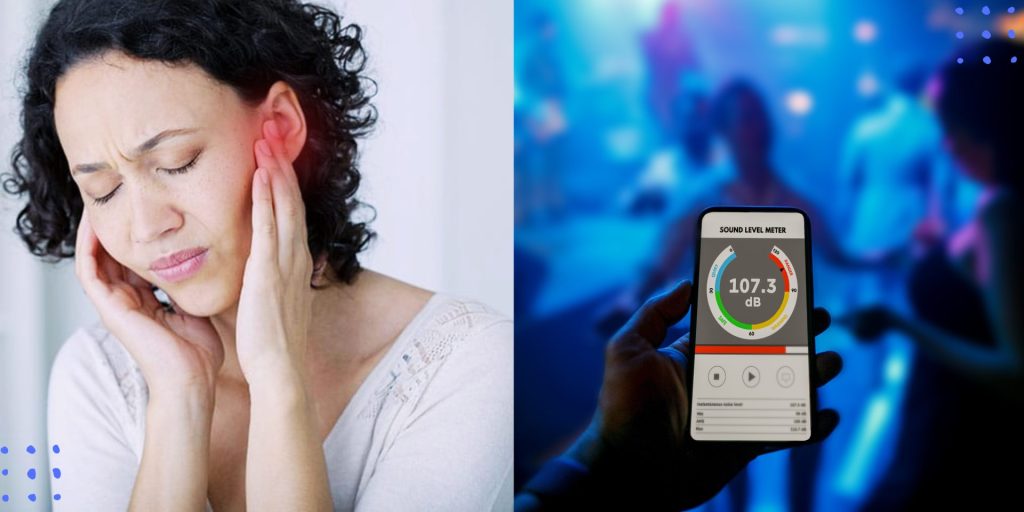
Hearing loss caused due to loud noises is referred to as noise-induced hearing loss (NIHL). People of all ages can experience noise-induced hearing loss. Generally, individuals working in industries such as agriculture, carpentry, mining, construction, and military are more susceptible to NIHL, as they are exposed to loud noises for long hours every day. In addition, individuals who listen to music at high volumes or attend concerts and events are more prone to NIHL.
So AirPods hearing loss is the potential noise-induced hearing loss caused after the use of AirPods at high levels of volume for a prolonged time.
The Science Behind AirPods and Hearing Damage
AirPods or any other wireless earbuds are convenient and portable for individuals who commute every day, fly in planes (especially cabin crew and other staff), go to study sessions, cafes, restaurants, or any other loud setting.
However, the surrounding noise forces individuals to increase the volume levels of AirPods. For instance, you turn up the AirPods volume high to listen to any podcast, music, etc., clearly to reduce or eliminate the background noise. When you do this frequently, your ears get accustomed to loud noise. Hence, they lose the sensation of loud noise, which eventually ends up in irreversible hearing loss.
Fortunately, you can check the decibel levels produced by AirPods and safeguard your auditory health. Follow the below steps:
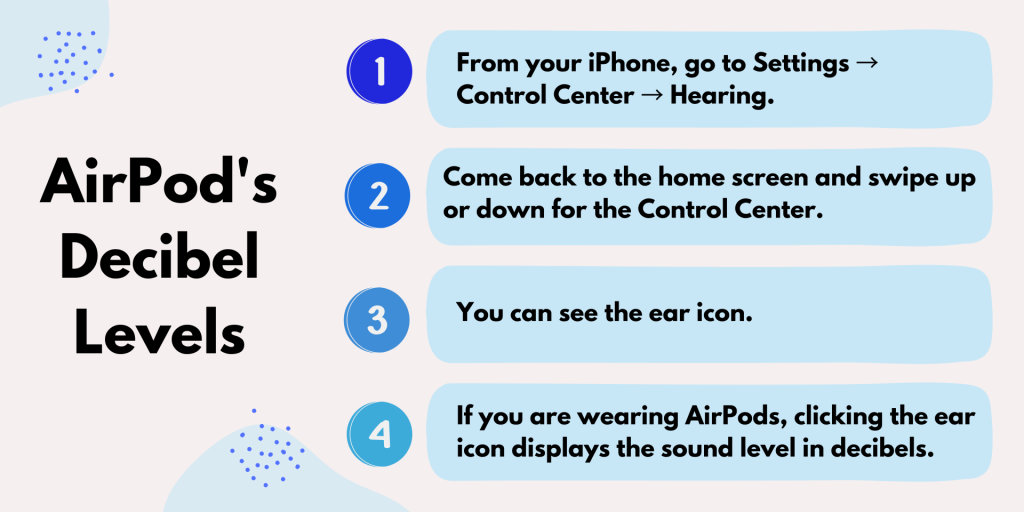
Ensure that the decibel levels are between 60 dB and 70 dB for safe listening.
How Are AirPods Bad for Your Ears?
AirPods or any other in-ear headphones can be bad for your ears. Though they may have the noise-canceling feature, it is not always effective at reducing loud noises, such as baby cries, etc.
Another major problem is that on-ear and over-the-ear headphones come with cushioned earcups, offering an additional buffer to noise, while Airpods and other in-ear headphones don’t. Plus, these cushioned or padded earcups provide extreme comfort for an extended period without causing any ear pain.
Moreover, you must keep in mind that iPhone sound levels can reach up to 100 decibels, and the threshold for safe listening is below 85 dB. AirPods are considered poor noise isolators. As they sit close to the ear canals, they can increase the sound level by up to 9 decibels.
By considering the impact of loud noises and the use of earbuds or headphones on hearing health, the World Health Organization suggests that people should limit listening to music or any other loud noises to 1 hour per day.
How do AirPods Hurt Your Ears?
AirPods and other in-ear headphones can hurt your ears due to multiple reasons. I have listed those reasons or factors below:
- Prolonged Use: If you wear in-ear headphones for long hours, they put pressure on your ear canals, leading to ear pain or fatigue. Hence, ensure you take breaks in between to prevent any kind of discomfort when wearing in-ear headphones.
- Ill-Fitting: When it comes to AirPods, proper fitting plays a vital role in ensuring maximum comfort. If the AirPods do not sit properly inside the ear canal, you may experience irritation and discomfort. As a result, choose ear tips that snugly fit inside your ear canal.
- Ear Anatomy: If you have a unique ear anatomy different than the standard one, you may experience discomfort even if the in-ear headphones fit properly.
- Sound Pressure: If the volume is extremely loud, in-ear headphones generate high pressure on the ear canal, damaging the sensitive ear structures. This, in turn, may result in hearing impairment. Therefore, maintaining a safe volume level is essential to avoid any kind of hearing damage.
Factors That Contribute To Hearing Loss with AirPods
As discussed above, sounds below 80 to 85 decibels are safe to listen. However, we are exposed to sounds of different decibels in our everyday life. Below, I have categorized these sounds into three groups:
Want to check the sound levels of your environment using your smartphone? Use the app Decibel X:dB Sound Level Meter, which provides accurate sound levels (decibels).
How Loud is Considered Too Loud?
In the following table, I have mentioned some noise levels and their average exposure limit:
| Noise Levels | Average Exposure Limit |
|---|---|
| 70 dB | 127 hours |
| 80 dB | 40 hours |
| 90 dB | 4 hours |
| 100 dB | 24 minutes |
| 110 dB | 2 minutes |
| 120 dB | 14 seconds |
Can AirPods Cause Tinnitus?
Yes, the prolonged use of AirPods at high volume poses the risk of developing tinnitus. Tinnitus is an underlying condition where people experience ringing, buzzing, or hissing sounds continuously without any external source. Simply put, tinnitus creates consistent sounds in the head without using any external source.
Tips for Preventing Hearing Loss While Using AirPods
AirPods hearing loss can result in various secondary issues, such as tinnitus, which can be prevented. Hence, it becomes essential to take precautions to prevent any damage to your auditory health while using AirPods.


The following are some effective tips to practice to prevent AirPods hearing loss:
- Limit the Volume: High volume levels for long hours damage your hearing health, leading to chronic hearing impairment. Hence, set the volume limit on your AirPods so that you can prevent listening to music at a high volume.
- Take Frequent Breaks: Taking frequent breaks from AirPods provides relief to ears. As AirPods’ ear tips sit in proximity to your ear canals, prolonged use can cause ear pain.
- Use Ear Cushions: Silicone ear cushions are available, especially for AirPods. They provide extra softness and cushioning to ears and reduce discomfort.
- Follow the 60/60 Rule: This rule states that you should listen to music at not more than 60% volume and for not more than 60 minutes.
- Use the Noise-Cancellation Feature: AirPods come with a noise-canceling feature, which blocks out surrounding noise and allows you to lower volume.
- Use Over-the-Ear or On-Ear Headphones: It is better to use over-the-ear or on-ear headphones when exposed to extremely noisy settings. They create a natural buffer between your ears and loud noises.
Conclusion
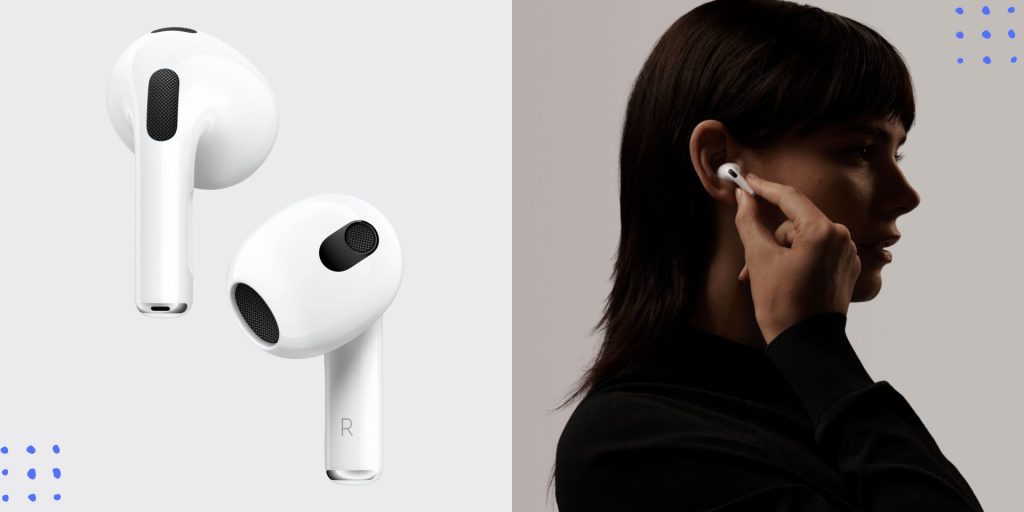
AirPods have become a go-to choice among people to consume audio content. However, it is essential to take care of the AirPod’s sound levels while listening to any audio content. Though AirPods are portable and convenient, using them at high volumes for long hours can lead to irreversible, noise-induced hearing loss or tinnitus.
However, with proper precautions, you can prevent AirPods hearing loss. Ensure that you maintain a safe volume level, take frequent breaks, leverage the noise-canceling feature, and use ear cushions for maximum comfort.
FAQs
1. How long should you wear AirPods a day?
Though there is no time limit to using AirPods, the World Health Organization (WHO) suggests following the 60/60 rule. The rule states that you should listen at 60% volume for not more than 60 minutes.
2. Can AirPods cause hearing loss?
Yes, prolonged exposure to loud noises through AirPods can cause hearing loss.
3. How loud are AirPods?
The volume levels of AirPods vary. They can reach a level that can be harmful to your hearing health if used for extended periods.
4. How loud should AirPods be?
The safe volume threshold stated by the World Health Organization (WHO) is 80 dB. An individual can listen safely to the sounds of 80 decibels and lower for 40 hours a week without any damage.
5. Do AirPods make you deaf?
AirPods, alone, are not contributors to becoming dead. If you use AirPods at high volumes for a longer time, it may pose a risk of developing several hearing issues, such as tinnitus and noise-induced hearing loss (NIHL).
6. Why are AirPods bad for your ears?
AirPods are earbuds, which, upon insertion into ears, cause pressure and friction, resulting in ear infection, irritation, or inflammation. The prolonged use can block the ear canal, leading to potential ear infections.

Erin Edwards received her Doctor of Audiology degree from Towson University in 2015 and her Ph.D. in Education and Leadership from Pacific University in 2022. She has worked with patients of all ages in a variety of settings and has a specific interest in cochlear implants, the relationship of hearing loss and dementia, and interdisciplinary healthcare.